Learning I’m Autistic Has Transformed My Middle-Aged Life
I thought it was too late for change, but I was wrong
It’s now been almost two years since, in the wake of recognizing my own undiagnosed autism at the age of forty-nine, I wrote these words:
The irony is so sharp it cuts: thirty years ago, twenty, even ten years ago, discovering this about myself might have radically changed my life. I could have made different life choices, directed my energy in different ways, maybe even gotten help in the areas that would have done the most good. I might have managed to lose fewer friends, or fewer jobs.
“But now … now I’m not sure what to do with the information. Internally, I’m careening, emotionally reeling as I reorganize my understanding of myself. Externally … nothing changes. Hardly anything can change, now. Because of my age, through a combination of outside forces and past decisions, I’m effectively beyond the point where this information can have any significant impact on the direction or success of my life.
I’m happy to report that I was too pessimistic about this. While it’s true that I have many fewer avenues for change at fifty-one than I would have had at twenty-one, I have managed some non-trivial adjustments for the better — too many, in fact, to cover in a single essay. But here are a few important ones:
A Fair Hearing
For my whole life I have been flinching from aural pain, while around me other people remain unbothered (except possibly to be exasperated at my ‘extreme’ reaction). The repeated lack of sympathy caused me to deeply internalize the fact that I shouldn’t react like this, so that — despite decades of experience to the contrary — I somehow kept expecting that I would be able to acclimate, that repeated exposure to loud sounds might desensitize me.
Once I understood that I have Sensory Processing Disorder (a condition which so regularly co-occurs with autism I wonder why it’s not diagnostic) my perspective shifted. My brain processes and experiences sounds and other sensory input differently; it is a natural hypersensitivity that will be with me my whole life.
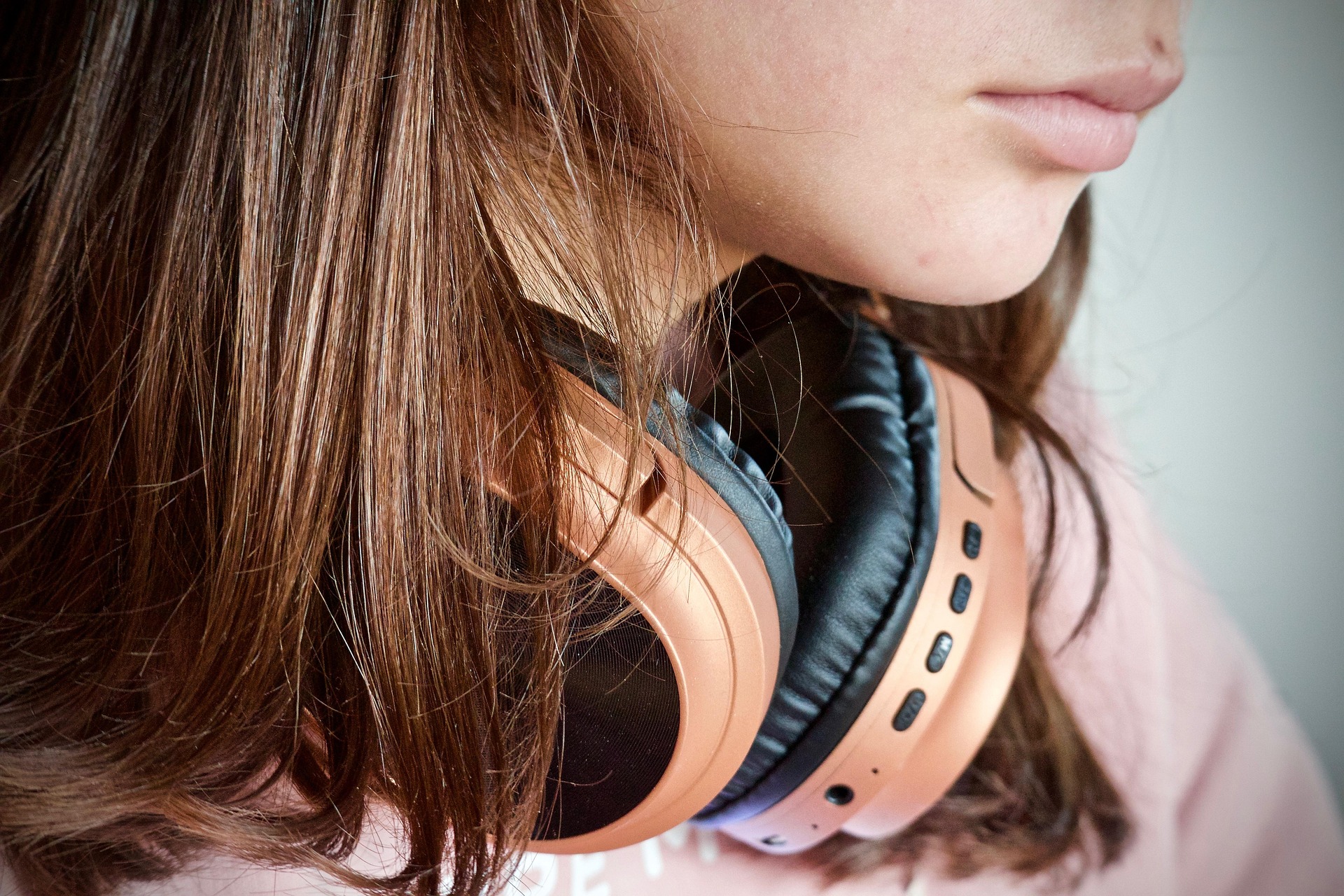
Which is why, two months after my Autism Epiphany, I took a deep breath and splurged on a pair of Bluetooth active noise-cancelling headphones. In true autistic fashion, I researched the everliving fuck out of ANC headphones first, seeking a pair that I could wear for hours without ear pain, sweating, etc.
That single decision alone revolutionized my life. In the scant few months between my Black Friday purchase and pandemic lockdown, I wore them to everything from Costco to Disney World. When my brain suggested that I should perhaps be embarrassed by wearing giant headphones in public, I sternly told it to fuck off, because I am autistic and I need this. And you know what? It helped so much.
I was able to reduce my stress even in my home environment, when on any given day someone’s loud music, or lawnmower, or cohetes might otherwise set my teeth on edge. (Cohetes are loud bottle rockets, like flashbangs without the flash; they edge out predawn off-key mariachi serenades as the worst aural bane of Mexico daily life.) And, bonus: I discovered that listening to podcasts while doing household chores helped me compensate for my executive dysfunction around initiation (which was another thing I didn’t fully understand about myself until I started listening to the Autistic/ADHD community).
Nor did I stop with headphones. Once I knew I was autistic, I could recognize that my lifelong ‘clumsiness’ was due to a proprioceptive deficit: I am unable to properly judge where the various parts of my body are in space, which means I bang into furniture and clip doorways on the regular. I bought corner protectors for nightstands and end tables, defiantly not caring that they are meant to safeguard small children. I bought grippy ‘grilling gloves’ that give me better fine motor control than oven mitts and which reach all the way to my elbows, putting an end to a lifetime of accidental oven burns.
Clothes Make the Woman
Many of my earliest memories have to do with the awful feeling of clothes on my body; as a young adult, eliminating polyester, nylon, and other plasticky fabrics from my life was so critical to my well-being I did it even knowing how bizarre it seemed to other people. I tried to laugh off my pickiness about such things by calling it my ‘natural-fiber fetish’, even though there was nothing remotely sexual about it.
But I did my best to ignore all the other aggravating aspects of my clothing. I never did follow fashion trends, but I wore a lot of moderately uncomfortable clothes in my attempts to look pretty or sexy. I did remove the most egregiously painful tags, but left the merely unpleasant ones alone. I mean, everyone else handled clothing tags just fine, so I should be able to as well, right?
After a few months in the online Autistic community, where loathing of tags and seams and various sorts of fabrics is completely normalized, the way I had been torturing myself with clothes for decades in order to fit into some idea of ‘normal’ began to seem ridiculous. From that community I also learned the important concept that each sensory unpleasantness an autistic person must cope with adds to her mental load; it requires additional processing cycles to suppress our reactions and brings us that much closer to overwhelm and meltdown. Any irritating stimulus I can remove, therefore, improves my ability to cope with everything else I cannot control.
Less than half a year after my self-diagnosis, the pandemic hit. I hunkered down in my house and didn’t see a single person other than my husband for fourteen straight months, breaking that streak only when we were able to travel back to the US to get vaccinated. A whole year without the pressure of ‘performing’ for people via clothes and makeup left me completely disinclined to ever do so again. By the time we left for the States, I had decided to completely revamp my wardrobe.
For many years my clothes selection process had involved showing up at a Goodwill and sifting through the offerings for something cute and tactually tolerable, but now I inverted the whole process. I thought extensively about what kind of clothing I personally would find most comfortable, given the climate I live in, and went looking online. When I found something that matched this concept I bought four of them, in three different colors. (In my case, that’s a loose, lightweight rayon dress that hangs right from the shoulders with no constriction anywhere, sort of like a sleeveless ankle-length muumuu.) These dresses are not even remotely sexy and they don’t irritate me at all and I love them so much. I wear them every day now, so as a bonus ‘getting dressed’ no longer contributes to decision fatigue.
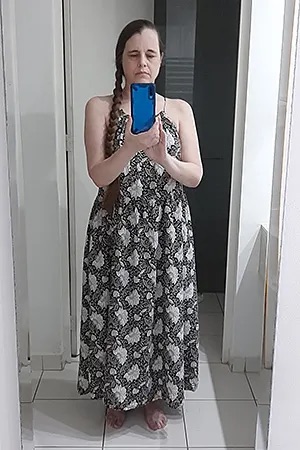
My facial expression does not reflect how happy I am with my new dress.
I also stopped wearing panties beneath my skirts and dresses, and I swore off underwire bras completely; I now go braless almost all of the time and wear a comfy 95% cotton sports bra when absolutely necessary. Yes, it gives me a uniboob, but I no longer allow myself to care.
There are a couple of tactile problems I still have found no solutions for. Socks are a big one; where I live there are two or three months a year when it’s too cold for bare feet, but so far my attempts to find a pair of socks that don’t drive me nuts have yielded no fruit. (‘Seamless’ socks, as far as I can tell, are a cruel lie.) Presbyopia has meant that I have to add glasses on top of my contact lenses, and earpieces are a constant irritant.
(At this point let me acknowledge that most of these changes have required a certain amount of money — several hundred dollars — and my ability to spend that money is a matter of economic privilege. I sympathize greatly with everyone for whom dropping $200 on headphones is out of the question, or who does not have the option as I do of working from home, where I do not have to conform to an employer’s idea of proper clothing.)
True Belonging
So far I’ve focused mostly on sensory adjustments, but the social ones are no less important. It’s impossible to know how all of this would have gone down in the absence of a simultaneous global pandemic; my encounters with people other than my husband have been few and very far between since March 2020.
But for what would turn out to be the last pre-pandemic New Year, a mere three months after my self-diagnosis, my husband and I traveled to visit several members of his family. Afterward, my brother-in-law wrote to me:
On your latest visit, you seemed more composed, more engaged and less fragile than I’ve seen you on earlier occasions. I think pre-diagnosis, you were more reactive to external stimuli and stressful social situations and, because you didn’t have a cohesive model to explain why you reacted the way you did, I think you ended up overwhelmed more often, requiring more rest and self-care in the form of isolation, or in some rare occasions, anger and frustration. Post diagnosis, I think you have more self-awareness about what’s going on with your emotions, understanding why you are reacting a certain way, giving you the ability to either move past or otherwise actively cope with situations that would have been overwhelming before, or pre-emptively perform self-care so you are better armed to deal with socializing.
“Other people being aware of the types of situations or stimuli that are difficult for you also helps, not only in people making accommodations, but in the fact that your knowledge of others’ awareness relieves a bit of anxiety or guilt from you, when you do find that you need to leave a situation, or react to things in a non-neurotypical way. I don’t know if you’ve had anxiety about this, but I certainly can imagine you might.
He saw this in me faster than I recognized it in myself, but on reflection, everything he says checks out. I am more at peace with myself, and better both at assessing my needs and at acting on them without worrying about how ‘normal’ it is or how other people will judge me.
It is of course difficult for me to intuit exactly how well this shift has gone over with each of the people I’ve spent time around in the last two years. But this observation from my brother-in-law does give me hope that most will see it as fundamentally positive.
“True belonging,” writes sociologist Brené Brown, “only happens when we present our authentic, imperfect selves to the world.” So it’s fair, I think, to say that by leaning in to my autistic nature, I’ve at least opened the way to better, deeper connections.
3 September 2021
Photo credits: 1