The Grand Unified Theory of Me
Out of the blue, a picture emerges
I wrote this just a few weeks after discovering that I am autistic, and before I’d learned that a puzzle piece (blue, even!) was part of the logo of a deeply problematic autism-related organization, or that the broader autistic community (understandably) rejects puzzle pieces as symbols of autism for that reason.
As you’ll see as you read on, I do not use the puzzle piece to signify something missing in myself, but something missing in my understanding of myself. This is a story of becoming whole. Unfortunately the essay doesn’t work without its central metaphor, so if you are autistic and have negative associations with puzzles, I ask you to try and set those aside while you read this story.
We all have stories of self. Whether we tell them to other people, or we hold them in our most private hearts, humans structure our memories and our identities as a narrative.
And we all want our stories to make sense, do we not? We like things to demonstrate causality: I am this way because that happened, and that happened because of this other thing.
Of course, we’re rarely just one story. Our selves are more anthology than novel. We cobble together self-comprehension like a jigsaw puzzle — sometimes one that’s missing a few pieces, or seems to have extras that snuck in from some other box.
When we’re young, our stories are fluid, still coalescing. But I’m well into ‘middle-age’ now — mere months away from my fiftieth birthday. My identity, fragmented as it may be, is so well-established it might as well have been glued down.
Until, suddenly, it wasn’t.
Once upon a time there was a very little girl.
She taught herself to read when she was two and three, and reading was her singular passion. Her preschool teachers would often have the little girl take over story time, reading picture books aloud to the whole class. By the time she started kindergarten, she was reading chapter books.
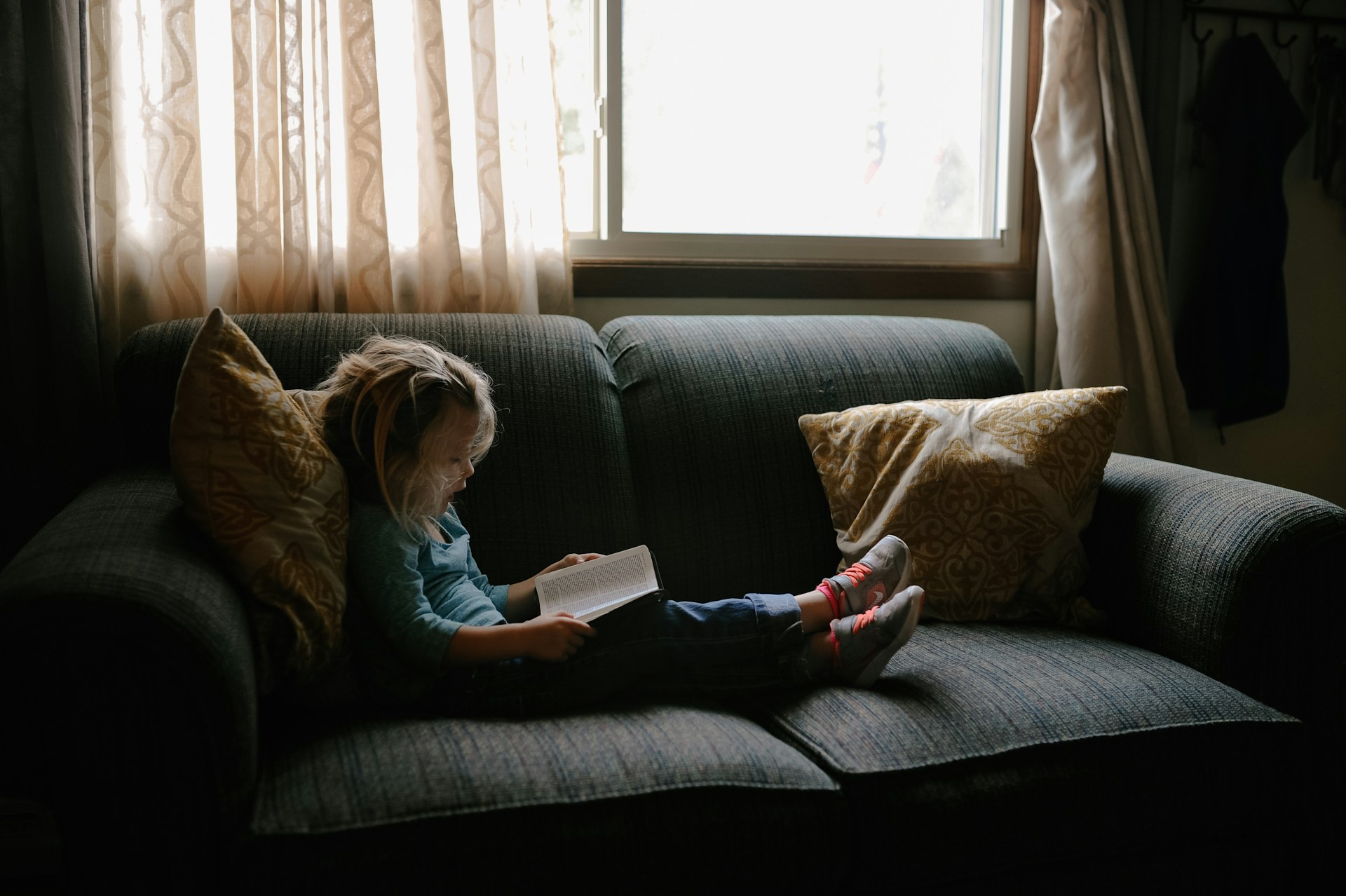
She was an only child, and she spent most of her time alone. She didn’t have any friends at her preschool, but she did play sometimes with the little girl of the same age who lived across the street. Once kindergarten started, though, the other little girl (who went to a different school) didn’t want to play with her anymore.
She had lots of toys — stuffed animals (which she liked) and baby dolls (which she didn’t like, except for the one with long hair she could comb and braid), a toy house with little people that were just pegs with heads, a big box of off-brand legos … later a plastic farm set with horses and cows and even little birds that would sit on the fences, and an erector set with a real electric motor.
She liked the legos and the erector set, but her favorite thing for a long time was to take all the farm animals out of their barn and set up an elaborate scene — always in the exact same way. She never made up stories or pretended that her animals or dolls were talking; she just lined things up in a row, or created little scenes. Even years later, when she got a giant Barbie house with dolls and furniture, she would dress the dolls in the clothes she liked best, and arrange the furniture very precisely, and that was all.
The little girl was at war with her own clothes, or maybe she was at war with her skin. Polyester anything would cause her to cry. The only kind of lace she could stand was cotton eyelet; anything else was a scratchy terror. She would rather wear her shirts inside out than feel a tag against her neck, and she could spend half an hour twisting one sock around, trying to find a way where the seam didn’t bother her quite so much.
Food was a constant problem for her also. Lots of things tasted bad, and even more things felt wrong in her mouth. And smells — chocolate made her nauseous; women’s perfume gave her a headache.
Everything was too strong and too much, including her own emotions. She had very little sense of the position of her body, so she bumped into things a lot. She was scared of balls flying at her, so was terrible at almost every kind of sports.
The little girl was smart — it was the one good thing she knew about herself, the one thing she was ever praised for — and even though the school immediately sent her up a grade for reading and math, she was still bored and distracted. Some of her teachers responded by giving her extra novels to read, or special research projects (this is why at the age of seven she could recite an inordinate number of facts about crickets). Other teachers thought she was disruptive and disrespectful, and punished her for reading instead of paying attention during class.
Novels and stories were her escape, a way for her to be less miserable by being somewhere, someone else. Yet despite her love of reading, language arts was her least-favorite subject, because — except for spelling — ‘good’ was so subjective. She liked math the best, because it always had a single right answer. She was a perfectionist who hated ever being wrong, or doing things that she wasn’t good at.
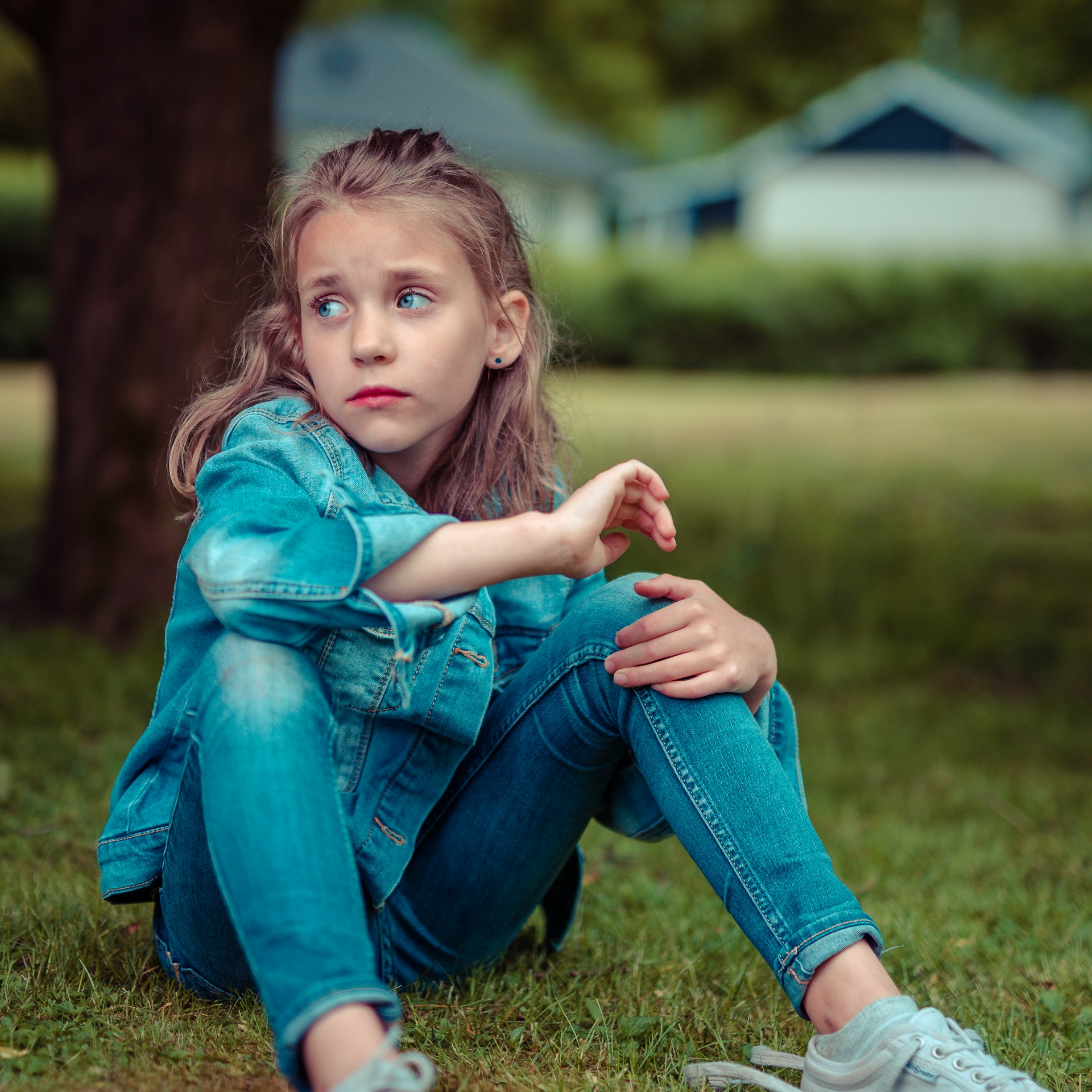
She didn’t like doing classwork in a group, in part because she needed everything to be perfect, and the other kids usually wouldn’t listen to her or didn’t want to follow her instructions. Besides that, other kids often bullied and made fun of her. She learned early that fighting back only got her punished, so she just stayed apart as much as possible.
Her experience taught her that people were mostly cruel. This included her own parents, who almost daily would hit her, kick her, and beat her with belts or wooden boards. Her mother also called her hateful names, forced her to do humiliating things, and twisted reality around until the little girl was terrified that she was crazy. Like the time when she was around nine or ten and her mother — angry at the way the girl kept running her thumbnail across her lips — made her suck her thumb for the next several hours, even in public.
The little girl decided that she hated people and wished she were grown up already so she wouldn’t have to be around them at all. She loved animals, though, especially dogs. For years, she read every book about dogs she could find, both fiction and not.

She thought about being a veterinarian, but was pretty sure that it would make her too sad. Instead at the age of nine she carefully planned her future career as a dog breeder (beagles were her favorite), poring over library books about everything from dog genetics to kennel construction. She was devastated when all the books cautioned that breeding was only viable as a hobby, because you could never make enough money to live on. (This was only the first of many times she would run into that problem.)
All in all, she was much happier on her own. She taught herself things from books: chess moves, perspective drawing. She could amuse herself all day long, if she had an interesting outdoor space. She played with bugs, chased butterflies, climbed trees and watched hummingbirds drink from flowers.
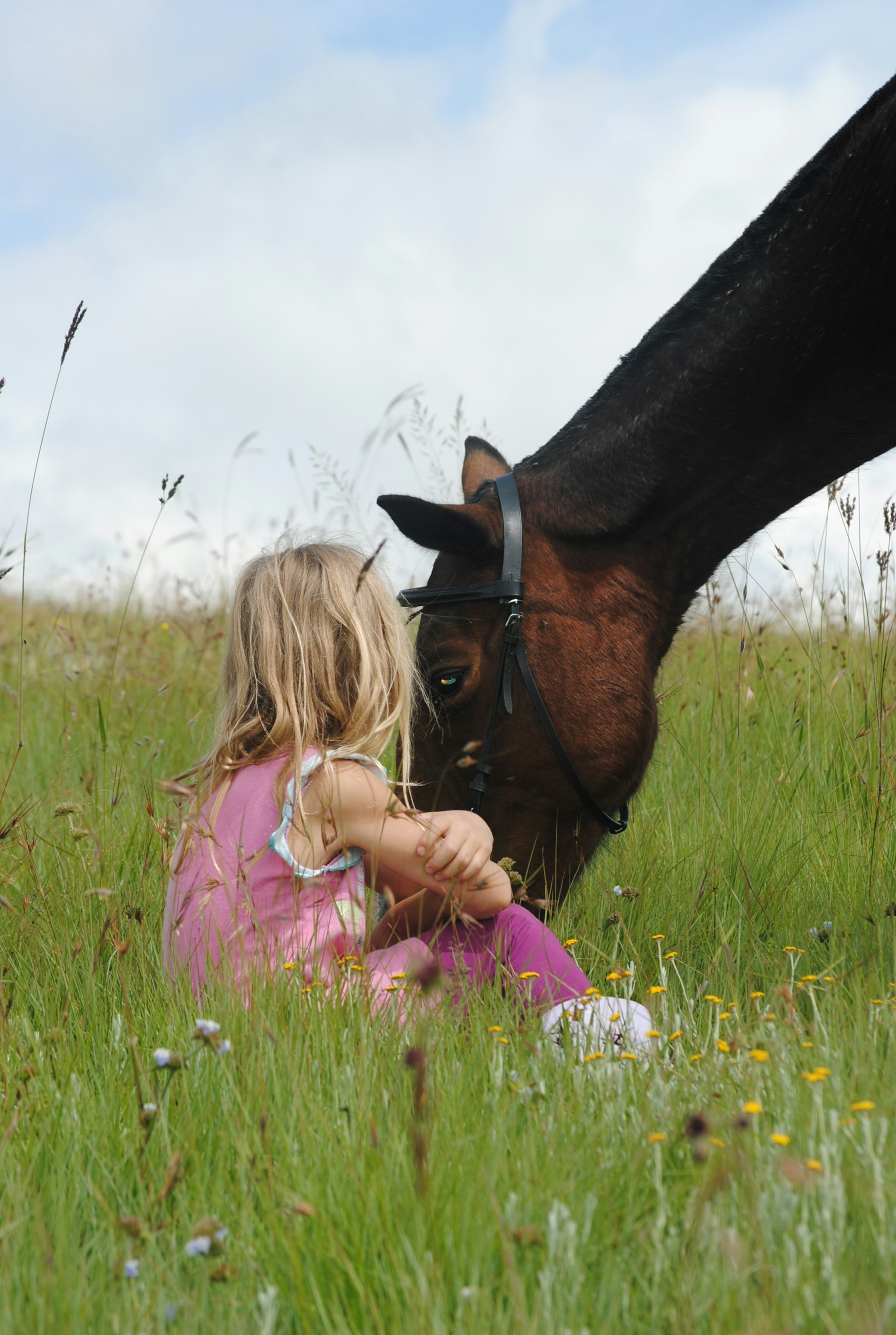
Her favorite times were summers spent with her grandparents. Not the pair of grandparents who lived in a small town; at their house she had to stay inside, often without even any books (although even there it was a relief not being hurt all the time). But the other two sets of grandparents lived in the country, and the girl spent her days with horses and dogs, chasing lizards and trying to figure out where the barn cat was hiding her litter of kittens.
Relatives were never easy for her— even the ones who didn’t hit and humiliate. It wasn’t that she couldn’t love people, just that she never understood why she was supposed to love people automatically because they were related. And she hated the way she was forced to offer hugs and endure touching from people with whom she felt no connection. But when she did love someone, she loved them with her whole heart.
This was the little girl’s story, until she was thirteen and not quite so little anymore, and she decided to change everything.
I do a lot of solo cooking, and for a few years now I’ve been listening to podcasts while I work in the kitchen — some twelve to fifteen hours on an average week.

Recently I was listening to a podcast episode about a young woman with anxiety and her quest to understand herself. I have, at various points, been diagnosed with both Social Anxiety Disorder and Generalized Anxiety Disorder, so it surprised me not at all that a lot about this woman’s life sounded very familiar.
And then, about twenty minutes into the episode, they dropped the punch line: what the young woman discovered about herself beyond her anxiety.
“What? No!” I protested, actually out loud to the empty room. I stood there stock-still for another minute — and then I paused the podcast, abandoned dinner prep, ran to my desk computer, and started googling.
Every time I read or hear something that sounds a little familiar, a little like me, that’s what I do: gather more information until I can confirm or deny. Most of the time it turns out to be irrelevant, a poor match. Once in a great while, the puzzle piece fits, and I can better explain something about myself that previously had no context and no name.
I’ve been consciously studying my own psychology for thirty-six years now, but it really only took me a couple of decades to get all the dramatic epiphanies out of the way. For a long time now, my discoveries have been more like small adjustments: I would read something that shifted my idea of what it means to be an introvert, or recognize that my childhood trauma resulted in a specific sub-type of PTSD.
What was unusual this time around is that I wasn’t looking at a new idea, but one I was already very familiar with — something that, if anyone had proposed outright that it might apply to me, I would have scoffed and accused them of not knowing me at all. In fact, it may have been only the slow reveal of the podcast episode — the deliberate avoidance of using a label until I had already identified strongly with the protagonist — that allowed me to properly consider the possibility.
That’s also why I haven’t — yet — told you exactly what I’m talking about.
When the girl was thirteen, something shifted inside her. There was no single moment of comprehension, no instant of decision — just a slow accumulation of awareness, an aggregation of loneliness. More and more she found herself wanting to be liked, to belong.
Instead of just enduring each moment, she began looking at the whole of her existence with a more analytical eye. And what she came to realize, in the year she turned thirteen, was that she was apparently humaning wrong.
That was the first epiphany. The second was that although as a child, a legal minor, she had no power over the circumstances of her life, there was one thing she could control and change: her self.
At thirteen this girl — the same girl who at seven was a walking, talking expert on the sex lives of crickets, who at nine had a detailed business plan for her future dog-breeding enterprise — turned her attention from animals to humans. She started watching people with the same absorption that she’d watched butterflies and hummingbirds: looking for patterns, learning to anticipate what people would do next.
She also started reading differently, consciously using novels as blueprints. Whenever she found a character she admired, she studied how that person talked and acted, and tried to emulate it.
And slowly, she changed herself. Year by year things got better — at school, if not at home. When she was fifteen she discovered drama, which was a double blessing: it was both a way to practice performing human and a doorway to the first real friendships of her life. At sixteen she ran away from home, and her friends’ families took her in.
She kept learning. She studied human psychology books like her life depended on it, because it kind of felt like it did. She made friends, lost friends; fell in love, got her heart broken: rinse and repeat. But at least she was having relationships, as opposed to living alone with a pack of dogs.
Adulthood also came with a level of control that helped her avoid sensory overload and emotional meltdowns. She could choose all her own clothes, make sure the right kinds of food were always available, plan her social entrances and exits in advance.
She saw therapists off and on through her twenties, but her mother had primed her to view mental health diagnosis as a threat, and so for a long time she approached it as a test that she could pass (by appearing ‘normal’) or fail (by appearing to have an internally-generated problem). It was a point of pride with her that she ‘passed’ every time.
Because of this, it wasn’t until the girl recognized her own depression disorder, at age twenty-eight, and specifically went to a doctor and asked, that she got any help with it. Likewise her often crippling social anxiety — she was ‘passing’ so well in the confines of the psychiatrist’s office that no one thought to diagnose her until she brought it up herself.
Eventually she began to see therapy not as a threat but as a tool, for understanding both herself and the ways other people were different from her. By then she had read a great deal of psychology, and had identified some of her own problematic behaviors, and set about correcting them. Sometimes just the knowledge would be enough, and the change would be dramatic and immediate; sometimes it took a decade or more of retraining to get herself where she wanted to be.
It was the third group of things that frustrated her. She wanted — expected — to be able to remake herself completely, but certain experiences and behaviors resisted all her considerable attempts.
And even though her understanding of people had grown complex and deep, and her pattern-matching, predictive capabilities were often uncanny — every once in a while she would be absolutely blindsided by mismatches. She’d be fired from a job for doing something that she’d never for a second imagined might be a problem, or discover that a sweetheart she trusted absolutely had been lying at every turn.
Despite all her work and all her progress, she never seemed to be able to meet the expectations of the larger world. She had the persistent feeling that everything was just harder for her than for everyone else.
The way she made sense of this — the best explanation she had for her continued difficulties — was that they were a lingering result of her severe childhood abuse. That the trauma had, as one psychiatrist explained, caused her growing brain to reinforce certain neurological connections which turned out to be counterproductive in the real world.
And certainly this explanation matched a lot of the evidence: the girl had extreme night terrors and dissociative flashbacks, as well as the depression and the anxiety — all hallmarks of PTSD.
Of course, the general expectation is that you’ll eventually recover from trauma. So the girl worked and worked on herself, year after year, trying to rewire the broken things in her brain.
And yes, as she moved through her thirties and into her forties, the most overt symptoms — the flashbacks and the nightmares — slowly diminished. But she became no less anxious, no less depressed, no less exhausted. She was forever falling short of expectations, not least of all her own.
Medicine is misogynistic. Not inherently, but practically, because the medicine that exists today in the real world is the product of centuries upon centuries of men studying other men.
This has gigantic implications for the other half of the people on the planet. Like all the women dying of heart attacks even after consulting their doctor because they weren’t experiencing the same symptoms men do.
We’re only now, in the twenty-first century, beginning to reduce the erasure women from psychology and medicine. We can’t even begin to guess yet what real gender equality in those areas would look like.
When I stopped the podcast and ran out of the kitchen and started googling, it was because the episode had indicated that this was another one of those cases where girls and women had been ignored because everyone was focused on boys and men. If this was true, then everything I thought I knew about the subject was only half the story.
Over the next few days I read every published study and article I could find that specifically focused on women. None of the research went back farther than about a decade. It appeared as though around 2015 the theory of a female phenotype gained general acceptance among informed clinicians — although the attention it received compared to the classic, male-focused model remained small.
Once I exhausted the scholarly work and expert interviews, I started reading and watching every first-person account I could find from other women who had this diagnosis. Almost all of them had had been diagnosed as adults, and almost all of them in the last ten years.
Throughout all of this, I was remembering things I hadn’t thought of in decades, about the very little girl that I used to be. I was thinking about every stage of my life since, measuring out my experience against the clinical conclusions and comparing it to what I heard in the voices of other women.
At some point, the evidence hit a tipping point, and I started to cry. I’m forty-nine years old, and I’ve just realized I’m autistic.
I didn’t cry because I thought it was a terrible thing to be; I cried for all my younger selves who hadn’t known.
The irony is so sharp it cuts: thirty years ago, twenty, even ten years ago, discovering this about myself might have radically changed my life. I could have made different life choices, directed my energy in different ways, maybe even gotten help in the areas that would have done the most good. I might have managed to lose fewer friends, or fewer jobs.
But now … now I’m not sure what to do with the information. Internally, I’m careening, emotionally reeling as I reorganize my understanding of myself. Externally … nothing changes. Hardly anything can change, now. Because of my age, through a combination of outside forces and past decisions, I’m effectively beyond the point where this information can have any significant impact on the direction or success of my life.
The dissonance between these two states, the roiling internal and the placid external, is excruciating.
But then again, isn’t that exactly the story of my life?
Physicists since Einstein have been seeking a way to combine the known forces at work in the world — electromagnetism, gravity, and the strong and weak nuclear forces — into one single framework, which they have (arguably prematurely) called the Grand Unified Theory.
Similarly, I’ve struggled to fit all the pieces of my psyche together into a coherent framework, but never could figure out how. Until this. It’s like my whole life I’ve been trying to sort out the puzzle of me, and now I finally stumbled across the box lid with the proper picture on it.
I have new concepts now, like ‘hyperlexia’, and ‘sensory processing disorder’, and ‘selective mutism’, and ‘masking’. Realizing ‘that weird thing I still do with my fingers at my mouth’ is actually ‘stimming’ was like looking at a bunch of blue jigsaw pieces and understanding, ‘Oh! That’s not water, that’s sky.’
Could I be wrong? Yes, it’s possible. Because I’ve studied psychology, I know about confirmation bias, and the availability heuristic, and the way memories are not recalled so much as reconstructed. Maybe my desire for a story that makes sense has skewed my assessment.
Prior to this essay, I’ve only told a few people that I’m on the spectrum, and all of them have — after an initial jolt of surprise — accepted my explanation. I’m still braced for pushback, though. Ten years ago, I would have gone after a professional diagnosis so fast your head would spin, even if just to prepare a defense against the people who might dismiss a self-diagnosis.
Now I live in a foreign country, and given the differences in language and culture, a formal diagnosis is simply not feasible. On the other hand, the practical reasons for it don’t apply any more either: I have no employer from whom I might request accommodation, and I’m not in a place where I could use mental health or disability services.
So I’m just going to have to trust myself. And you, reading, will have to trust me.
From a neuroscientific standpoint, autism is not categorically different from anxiety, depression, or PTSD — they are all neurobiological disorders. But autism feels different, in that its development appears to be less complicated by external forces. And I’ve long understood that autism is a permanent condition, not something that one is supposed to recover from or can be cured of.
That distinction turns out to be critical, for me. Mere days after putting together the pieces of my own puzzle, I learned that Hannah Gadsby, a woman whom I passionately admire, is also on the spectrum. In a TED talk earlier this year, she said, “Diagnosis gave me a framework on which to hang bits of me I could never understand. My misfit suddenly had a fit.”
Now for me, that was mostly good news. I always thought that I couldn’t sort my life out like a normal person because I was depressed and anxious. But it turns out I was depressed and anxious because I couldn’t sort my life out like a normal person … because I was not a normal person, and I didn’t know it.Now, this is not to say I don’t still struggle. Every day is a bit of a struggle, to be honest. But at least now I know what my struggle is, and getting to the starting line of normal is not it.
What I’ve found is that identifying my autism has lessened my pervasive sense of myself as a failure. Somewhere inside me, something has been tightly clenched for my whole life, though I only noticed when I felt it begin to relax.
As Hannah says, “I no longer believe that I am falling short of expectations. I believe it is those expectations that are falling short of my humanity.”
That’s the epiphany that lies like a blessing at the heart of all of this: I’m not supposed to be normal. My humaning may seem wrong to you, but it’s right for me.
It’s not water, it’s sky.